
www.oilgastechnology.com
15
'26
Written on Modified on
Subsea Tieback Engineering for Offshore Field Developments
Equinor Energy, Petoro, and TotalEnergies are developing the Grimsnes hydrocarbon discovery using standardized subsea infrastructure tied back to Oseberg Sør.
www.equinor.com
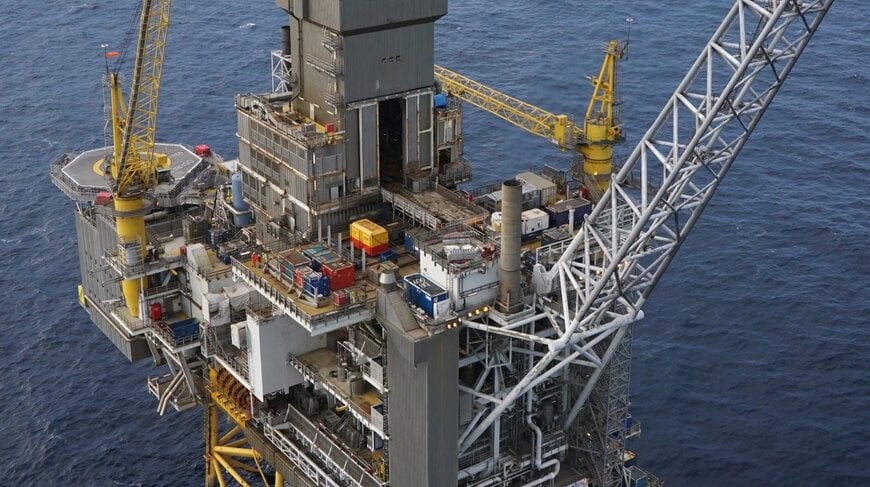
Equinor Energy, Petoro, and TotalEnergies are collaborating to implement a fast-track subsea tieback system for the newly proven Grimsnes offshore hydrocarbon discovery in production licence PL 190. The project addresses offshore reservoir depletion by utilizing standardized subsea templates to route production from mature North Sea fields into existing processing infrastructure.
Partnership Roles and Offshore Field Context
Equinor Energy AS acts as the operator with a 50 percent equity share, partnered by Petoro AS holding 40 percent and TotalEnergies EP Norge AS holding 10 percent. The joint venture focuses on offsetting natural reservoir decline across the Norwegian continental shelf, where Norway supplies approximately 20 percent of European oil demand and 30 percent of European gas demand.
Executing tiebacks for marginal discoveries requires close technical alignment between partners to balance capital expenditure risks, allocate subsea equipment, and secure shared capacity across existing host installations.
Technical Solution and Subsea Architecture
Exploration well 30/8-7 S, drilled by the semi-submersible rig Deepsea Bergen at a water depth of 96 meters, proved recoverable resources estimated between 19 and 50 million barrels of oil equivalent (3 to 8 million standard cubic meters).
To extract these volumes, the partnership is deploying a standard four-slot subsea template accommodating two or three production wells. The technical architecture relies on standardized, repeatable equipment configurations rather than bespoke field designs. Standardized subsea production trees, manifold components, and flowline interfaces ensure that long-lead equipment procured prior to formal project sanctioning can be redeployed across alternative developments if operational parameters change.
Host Integration and Processing Flow
The Grimsnes subsea template will connect directly to the Stjerne subsea installation, located approximately 15 kilometers southwest of the host facility. Production fluids will flow through existing subsea gathering lines to the Oseberg Sør integrated drilling, accommodation, and production platform.
Following separation and primary treatment on Oseberg Sør, crude oil enters the Oseberg Transport System for pipeline conveyance through the Oseberg Field Centre to the onshore Sture terminal. Utilizing operational offshore hosts minimizes subsea intervention costs and prevents capital duplication for surface processing equipment.
Project Execution and Operational Impact
The joint development model alters traditional offshore engineering phases by establishing pre-drilling concepts and initiating equipment procurement ahead of final project sanctioning.
“We plan to quickly tie the discovery back to existing subsea facilities and produce the volumes through the Oseberg Sør platform. By making use of already paid for infrastructure we achieve good resource utilisation and competitive barrels,” stated Frode Skarstein, senior vice president for Exploration and Production West in Equinor.
“Our aim is to halve both costs and the time from discovery to production through simpler and faster processes, more standardisation, repeatable solutions and more extensive use of industry standards,” stated Gunnar Nakken, senior vice president for projects and subsea on the Norwegian continental shelf.
Standardizing subsea production systems targets a 50 percent reduction in cycle time from initial discovery to first production, targeting commissioning within three years.
Edited by Evgeny Churilov, Induportals Media - Adapted by AI.
www.equinor.com
