
www.oilgastechnology.com
20
'26
Written on Modified on
Halliburton Launches Xaminer Deep Testing Service For Complex Reservoirs
This advanced logging service delivers deep-reading reservoir insights and boundary identification in a single run, reducing execution risk and accelerating critical development decisions.
www.halliburton.com
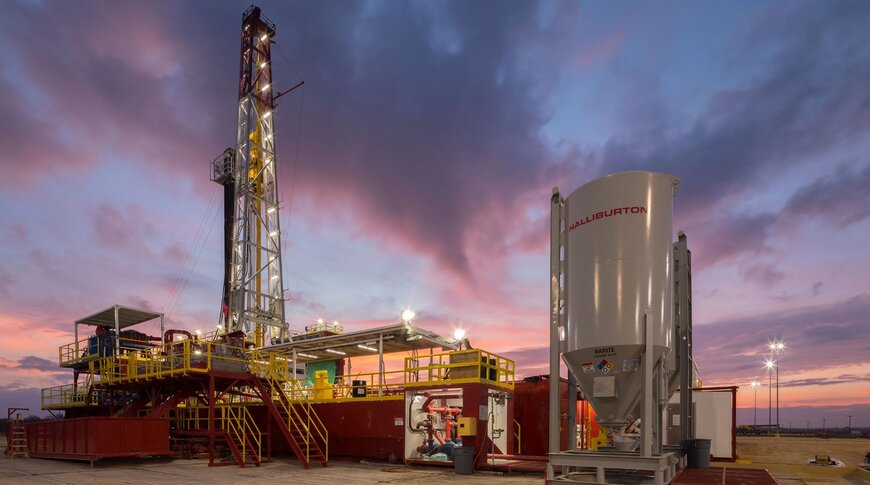
Evaluating complex reservoirs — such as stacked, laminated, heterogeneous, and high- or low-permeability formations — traditionally requires extensive drill stem testing (DST). While DST provides definitive reservoir properties, it involves significant deployment time, operational risks, and high financial costs. To address this, Halliburton collaborated closely with several active field operators. The objective was to combine operator field data and regional insights with oilfield service engineering to develop a digital infrastructure capable of acquiring deep reservoir data earlier in the well life cycle.
Technical solution and operational architecture
The technical solution consists of an all-inclusive wireline tool string configured to capture both near-wellbore and far-field metrics during a single logging run. The system functions by combining high-resolution pressure transient analysis with extended-radius fluid identification sensors. By measuring pressure fluctuations and fluid gradients across multiple zones, the tool map boundaries and assesses lateral connectivity without requiring full-scale flow tests. The tool string interfaces directly with existing digital reservoir evaluation workflows. This allows the acquired pressure and fluid data to be integrated into real-time reservoir simulation software, accelerating subsurface analysis.
Deployment and industrial application
The logging service is deployed directly within open-hole wellbores during the early appraisal and development phases. Operators are utilizing this system in complex geological environments where multi-zone evaluation is required. Halliburton manages the wireline execution and real-time data transmission, while operator teams utilize the streaming telemetry to verify reservoir continuity across different intervals. This integration with existing drilling and completion infrastructure eliminates the need for dedicated test strings for initial boundary verification.
Expected operational impact
By executing near-wellbore and deep-reading measurements in a single run, the service alters the workflow of well development. The primary technical benefit is the acquisition of reservoir data ahead of full-scale testing, which stabilizes the data collection process and reduces execution risk. Operators can optimize completion designs and identify fluid boundaries across multiple intervals prematurely. This technical approach maximizes asset value by replacing or refining subsequent testing phases through precise, high-resolution pressure data and quantified connectivity analysis.
Edited by Evgeny Churilov, Induportals Media - Adapted by AI.
www.halliburton.com
