
www.oilgastechnology.com
23
'26
Written on Modified on
Flame Detector Gains Hazardous-Area Certification
Emerson has introduced a flameproof version of its Rosemount 965 Flame Detector, extending hydrocarbon flame detection to hazardous industrial environments while maintaining factory-calibrated operation and flexible system integration.
www.emerson.com
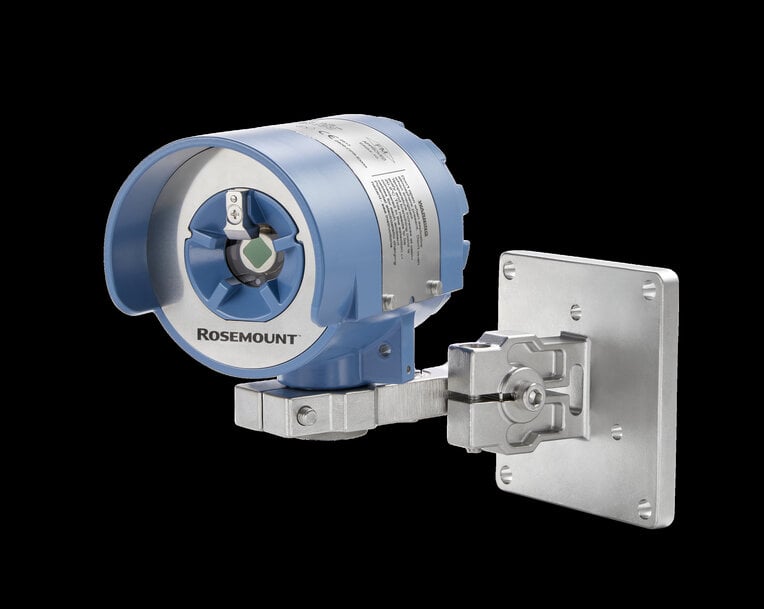
Industrial facilities handling flammable hydrocarbons require flame detection systems that can operate reliably in hazardous locations while minimizing maintenance and integrating with existing safety infrastructure. Emerson has expanded its Rosemount 965 Flame Detector portfolio with a flameproof model certified for hazardous-area installations, broadening deployment options across process industries without changing the detector's core sensing technology.
Hazardous-Area Certification Expands Deployment Options
The new flameproof model enables the Rosemount 965 Flame Detector to be installed in hazardous locations where hydrocarbon fire detection is required. It combines hazardous-location certification with the detector's existing QuadSense infrared sensing technology, factory-calibrated-for-life design and multiple communication interfaces.
The product is intended to support fire protection strategies in facilities where explosive atmospheres may be present while maintaining compatibility with existing industrial automation and safety systems.
Four Infrared Sensors Improve Flame Discrimination
The detector incorporates QuadSense technology, which uses four infrared sensors to distinguish hydrocarbon flames from non-flame background infrared radiation. This multi-sensor approach is designed to improve detection reliability while reducing nuisance alarms caused by environmental interference.
Under specified operating conditions, the detector can identify hydrocarbon fires at distances of up to 45 meters (150 feet), with a typical response time of less than five seconds. Users can configure five selectable sensitivity levels, allowing detection performance to be matched to different operating environments and risk profiles.
Factory Calibration Reduces Maintenance Requirements
The Rosemount 965 is factory calibrated for its operational lifetime, reducing the need for routine field recalibration. Built-in infrared self-test functions continuously verify the condition of the optical components and internal electronics between scheduled inspections.
For system integration, the detector supports multiple output options, including HART communication, enabling compatibility with standard industrial communication infrastructures. Universal wiring arrangements are intended to simplify installation and standardize deployment across multiple sites.
The enclosure is rated IP66 and IP68, providing protection against dust ingress and water exposure in demanding industrial environments.
Applications Across Process and Industrial Facilities
The flameproof version is designed for hazardous industrial environments, including:
- Oil and gas production and processing facilities
- Chemical and petrochemical plants
- Storage tank farms
- Hazardous materials storage facilities
- Explosives and munitions sites
The Rosemount 965 product family is also suitable for non-hazardous applications, including transportation infrastructure, public buildings, cable tunnels, semiconductor manufacturing facilities, warehouses and other locations requiring dependable hydrocarbon flame detection.
According to Emerson, the additional hazardous-location certification allows users to deploy the same detector platform across a wider range of operating environments while balancing detection performance, resistance to nuisance alarms and reduced maintenance requirements.
Additional Context
This section details technical specifications and competitive benchmarking not included in the original product announcement
Hydrocarbon flame detectors are widely used in high-risk industrial sectors where rapid fire detection is essential for personnel safety and asset protection. The market includes technologies based on ultraviolet (UV), infrared (IR), combined UV/IR, and multi-spectrum infrared sensing.
Multi-spectrum infrared detectors, such as the Rosemount 965, are increasingly adopted because they provide improved discrimination between genuine hydrocarbon flames and background infrared sources, helping reduce false alarms compared with traditional single-spectrum detectors.
Comparable products are available from manufacturers including Honeywell, MSA Safety, Dräger, Teledyne Gas & Flame Detection, and Spectrex, many of which offer hazardous-area certifications, built-in diagnostics and industrial communication interfaces. Emerson differentiates the Rosemount 965 by combining four-channel infrared sensing with factory-calibrated-for-life operation and continuous infrared self-testing, reducing routine maintenance while maintaining compatibility with modern industrial automation systems.
Edited by Sucithra Mani, Induportals editor – adapted by AI.
www.emerson.com
According to Emerson, the additional hazardous-location certification allows users to deploy the same detector platform across a wider range of operating environments while balancing detection performance, resistance to nuisance alarms and reduced maintenance requirements.
Additional Context
This section details technical specifications and competitive benchmarking not included in the original product announcement
Hydrocarbon flame detectors are widely used in high-risk industrial sectors where rapid fire detection is essential for personnel safety and asset protection. The market includes technologies based on ultraviolet (UV), infrared (IR), combined UV/IR, and multi-spectrum infrared sensing.
Multi-spectrum infrared detectors, such as the Rosemount 965, are increasingly adopted because they provide improved discrimination between genuine hydrocarbon flames and background infrared sources, helping reduce false alarms compared with traditional single-spectrum detectors.
Comparable products are available from manufacturers including Honeywell, MSA Safety, Dräger, Teledyne Gas & Flame Detection, and Spectrex, many of which offer hazardous-area certifications, built-in diagnostics and industrial communication interfaces. Emerson differentiates the Rosemount 965 by combining four-channel infrared sensing with factory-calibrated-for-life operation and continuous infrared self-testing, reducing routine maintenance while maintaining compatibility with modern industrial automation systems.
Edited by Sucithra Mani, Induportals editor – adapted by AI.
www.emerson.com
