
www.oilgastechnology.com
12
'26
Written on Modified on
Through-Tubing Cement Evaluation for Offshore Well Abandonment
Halliburton introduces the IntelliTTCE service to verify zonal isolation and barrier integrity behind production tubing before offshore plug and abandonment operations.
www.halliburton.com
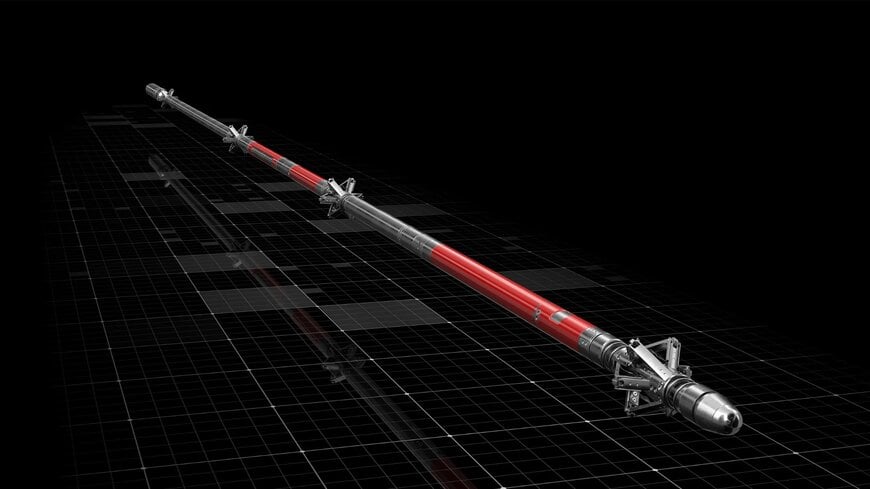
Preparing mature offshore oil and gas wells for permanent plug and abandonment (P&A) requires verified zonal isolation to prevent fluid migration between subsurface formations and the seafloor. Under conventional well decommissioning workflows, assessing the condition of annular cement behind casing strings typically requires mobilizing a heavy workover rig or drilling unit to retrieve the production tubing first. Only after the tubing is pulled can standard wireline logging tools access the production casing directly to evaluate cement bond quality.
This sequence creates significant operational and financial uncertainty during the front-end engineering and planning phases. Without accurate diagnostic data on barrier integrity prior to rig arrival, operators must build extensive contingencies into their P&A schedules and budgets. If cement degradation or channeling is discovered only after tubing retrieval, intervention scopes must be expanded mid-campaign, leading to non-productive rig time and higher decommissioning costs.
How Through-Tubing Cement Evaluation Works
To address the lack of early barrier diagnostics, Halliburton developed the IntelliTTCE™ service, a wireline evaluation system engineered specifically for offshore P&A applications. By operating directly through existing production tubing, the service eliminates the prerequisite of tubing removal to obtain downhole well integrity data.
The system relies on a physics-based evaluation methodology that integrates two independent deterministic measurement techniques alongside high-resolution azimuthal cement mapping. Combining dual deterministic methods allows engineers to cross-verify acoustic or physical responses through multiple concentric steel barriers — specifically the inner production tubing and the outer production casing — to isolate the signature of the annular cement sheath.
High-resolution azimuthal mapping divides the wellbore circumference into distinct radial sectors rather than relying solely on averaged omnidirectional readings. This directional sensitivity enables technical teams to detect localized defects, such as vertical channels, micro-annuli, or voids on one side of the casing, which could compromise long-term zonal isolation even when average cement bond values appear acceptable. According to Halliburton, this deterministic, physics-based architecture produces repeatable diagnostic measurements across varying downhole environments.
Integration into Offshore P&A Planning Workflows
Deploying through-tubing cement evaluation during the pre-abandonment phase shifts well integrity verification to the front end of the decommissioning lifecycle. Using slickline or electric wireline conveyance, operators can log wells from lighter, lower-cost vessels or existing platform infrastructure well ahead of heavy rig mobilization.
"Reliable well data early in project planning helps operators define intervention strategies with greater certainty," said Chris Tevis, vice president of Wireline and Perforating at Halliburton. "IntelliTTCE service brings that evaluation to the front end of the process and helps customers make better decisions around actual well conditions rather than preliminary assumptions."
With verified barrier maps in hand, completion and decommissioning engineers can determine whether existing annular cement meets regulatory isolation criteria or requires remedial cementing, such as section milling or perforate-wash-cement operations. When existing barriers are confirmed intact, operators can avoid unnecessary tubing retrieval and design streamlined plug placement sequences tailored to actual wellbore conditions.
Additional Context
In offshore well decommissioning, regulatory frameworks such as NORSOK D-010 in the North Sea and regulations enforced by the Bureau of Safety and Environmental Enforcement (BSEE) in the United States mandate verified, permanent barriers spanning the full cross-section of the wellbore before a well is abandoned. Historically, standard ultrasonic and sonic cement bond logs (CBL/VDL) have required direct contact with the inner wall of the cemented casing to measure acoustic impedance and attenuation accurately, because the fluid-filled annulus between production tubing and casing scatters and attenuates conventional acoustic signals.
Over the past decade, oilfield service providers have increasingly focused on through-tubing logging technologies — combining pulsed-neutron, spectral acoustic, and multi-detector ultrasonic techniques — to overcome multi-string signal attenuation. While specific tool dimensions, maximum operating temperatures, pressure ratings, and exact radial sector counts for the IntelliTTCE™ service were not disclosed in the initial announcement, industry adoption of through-tubing barrier evaluation continues to expand as aging offshore basins in the North Sea, Gulf of Mexico, and Southeast Asia enter large-scale decommissioning phases.
Edited by Evgeny Churilov, Induportals Media - Adapted by AI.
www.halliburton.com
