
www.oilgastechnology.com
28
'25
Written on Modified on
Petrobras and Coppe partner to cut oil and gas flow losses
Cooperation between the institutions will allow the construction of unprecedented infrastructure for testing in the country.
petrobras.com.br
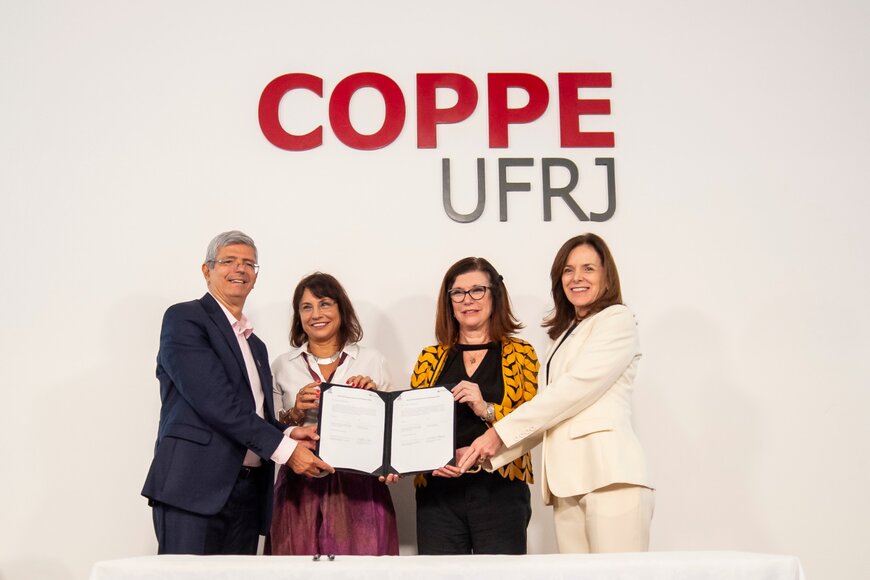
Petrobras and the Federal University of Rio de Janeiro (UFRJ) signed a cooperation agreement (TC) for the construction of a flow guarantee Loop. With unprecedented technical characteristics in the country, the structure will be able to test new technologies to prevent the formation of hydrates and paraffins, elements that can clog pipelines and compromise oil and gas production. The first phase of the TC foresees a partnership between professors from the Chemical Engineering Program of the Coordination of research and engineering programs (Coppe), at UFRJ, and specialists from the Petrobras Research Center (Cenpes) for the elaboration of the conceptual and basic project of the loop.
With a diameter of 2 inches and an operating pressure of 150 bar, the loop will be able to operate with a load of up to 100% CO2 (gas that can also form hydrates). This open-air laboratory, with a forecast of about 150 meters of pipeline, will allow testing with CO2-based fluids, targeting new businesses and projects in the area of Capture, Storage and use of CO2.
The structure will be built in the existing Technological Center on Fundão Island, with resources from Petrobras ' commitment to research, development and innovation (R&D,I) with the National Agency of Petroleum, Natural Gas and biofuels (ANP). The flow guarantee Loop can be used by other partners in academia and the market through research contracts with the university to cover the costs of maintenance and use. The estimated term for commissioning is up to 5 years.
Strategic partnership
Since the 1960s, Petrobras has maintained strategic partnerships with UFRJ, especially with Coppe, consolidating a pioneering collaboration in the development of technological solutions for the oil and gas industry. Currently, the partnership reaches significant numbers: more than 700 technological partnerships since the foundation of Cenpes (in 1963), with more than 300 R&D projects,I carried out in the last 10 years, with an investment of about R$ 1.35 billion in the period. The results include 81 patent applications in Brazil, of which 74 are still active, and 164 terms of cooperation in force, totaling more than R$ 850 million contracted. Petrobras holds a total of 1,300 active patents and has been leading the ranking of filing applications in the country for four years.
Hydrates
Crystalline structures formed by water molecules that trap gas molecules, such as methane, within their cavities. When formed, they look like ice and can clog production and injection lines. Hydrates form under high pressure and low temperature conditions typical of subsea oil production environments.
Paraffins
Formed molecules of carbon and hydrogen that are part of the composition of oil. They can be found in various forms, from light gases to heavy solids. They have several industrial and commercial applications, but their densification in oil production lines, motivated by the loss of temperature of the produced fluid, can generate damage such as loss of load and even obstruction of the lines.
www.petrobras.com
